Send us a message — our travel experts will get back to you shortly with the best guidance and packages for your journey.

Call Anytime
Call Anytime




Posted 3 Days ago
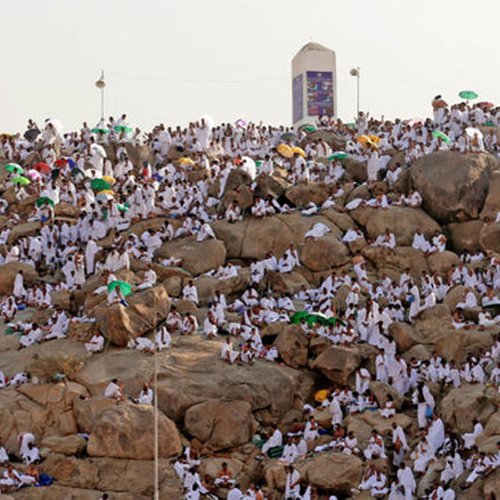
The most sacred site on the Hajj pilgrimage is Arafat, which is 20 kilometres southeast of Makkah. The Mount of Mercy, or Jabal al-Rahmah, is the name of this big plain. On the 9th of Dhul-Hijjah, millions of pilgrims come here every year for what many people think is the most important part of their journey.
Arafat is called "Rukn-e-Azam," which means "the Greatest Pillar of Hajj." The most important part of the Hajj is standing at Arafat, because without it, the whole pilgrimage is not valid. The Prophet Muhammad ﷺ said, "Hajj is Arafat," which showed how important this was.
This holy plain is made up of about 15 square kilometres of open desert, and in the middle of it is the small granite hill of Jabal al-Rahmah. A white pillar now marks this old place where prophets used to walk and God's mercy came down. Arafat is not just a place for Muslims from all over the world to go; it is also a spiritual refuge where they can get as close to Allah as possible.
The Quran's Surah Al-Baqarah, verse 198, says,
"فَإِذَا أَفَضْتُم مِّنْ عَرَفَاتٍ فَاذْكُرُوا اللَّهَ عِندَ الْمَشْعَرِ الْحَرَامِ"
(When you leave Arafat, remember Allah at al-Mash'ar al-Haram). This holy reference shows how important Arafat is in Islam.
According to Islamic tradition, Arafat is where the Prophet Adam (AS) and Hawwa (AS) met again after they fell from Paradise. They had been apart and travelled the world, but they found each other again on this beautiful plain. People first saw God's mercy here. This reunion gave the place the name "Jabal al-Rahmah,"which means "Mount of Mercy."
Before Islam, the Arabs who lived before Islam also knew how important Arafat was, but their customs were very different from Islamic ones. They would meet there at different times of the year, but some of their ceremonies were pagan. These things changed when Islam came. They became purer, and the real spiritual meaning of Arafat became to stand there in humble obedience to Allah.
The most important thing that ever happened at Arafat happened on the 9th of Dhul-Hijjah, which was the 10th year after Hijra. It was then that Prophet Muhammad ﷺ gave his last sermon (Khutbat-ul-Wida) from this holy mount.
The Prophet's last public speech had rules that were true everywhere and at all times:
The Prophet said that life, property, and honour are sacred. This was the beginning of basic human rights that would later become part of global human rights frameworks.
He said that no Arab is better than a non-Arab and no non-Arab is better than an Arab, except for being religious. This revolutionary idea tore down tribal hierarchies and made spiritual merit the only way to judge a person's worth.
Women's Dignity: The sermon stressed how important it is to treat women with respect and honour their rights, which made women much more respected in society.
Brotherhood: The idea of Muslim brotherhood around the world was put into words, and people from different races, tribes, and countries came together.
Economic Justice: The Prophet spoke out against unfair business practices and condemned usury. This led to the development of Islamic economic ideas.
More than 100,000 pilgrims heard this speech, which set the standard for Islamic civilisation and is still followed by Muslims all over the world.
The 9th of Dhul-Hijjah is the Day of Arafah, which is the most important spiritual day of the Hajj. This day is very important in Islam.
The Prophet ﷺ said in a hadith preserved by Tirmidhi, "Hajj is Arafat." This means that standing at Arafat is the most important part of Hajj, even though all the other parts are very important. Wuquf-e-Arafat is a religious ceremony in which pilgrims gather on the plain from noon to sunset to pray, ask for help, and remember Allah.
According to Islamic tradition, Allah's kindness flows freely to the pilgrims on this day. Forgiveness is always available, and true repentance is always welcome. A lot of pilgrims say that while they were in Arafat, they went through a big spiritual change and felt like their faith had been renewed and their sins had been washed away.
The meeting at Arafat is a strong reminder of the Day of Judgement, when everyone will stand before Allah. All pilgrims, no matter how much money they have, how poor they are, or where they come from, wear simple white clothes and stand as equals. The fact that they look and want the same things shows that everyone will be equal on the Day of Resurrection.
The plain of Arafat is about 15 square kilometres of mostly flat desert land with a few small hills and rocky outcrops all around it. Those who understand the spiritual significance of the land find it both harsh and deeply moving.
Jabal al-Rahmah is a small hill made of granite that rises about 70 meters above the centre of the plain. This mountain isn't very big, but it has a lot of historical and religious meaning. A white marble pillar marks the top of the hill right now. Pilgrims can connect with the site's holy past there. Because the hill isn't too steep, it's easy for pilgrims to climb and pray. But Islamic scholars say that the whole plain of Arafat is just as important to the soul. It is required for Hajj to stand anywhere within the limits of Arafat.
Many pilgrims find the peaceful and calm atmosphere at Arafat to be very moving. The wide-open sky, with only the gentle rise of Jabal al-Rahmah breaking it up, makes for a calm and peaceful place to think. Pilgrims can fully focus on their relationship with Allah when they are away from the noise and activity of the city.
The rituals at Arafat include both religious duties and personal spiritual practices, which make for a complete worship experience.
From noon until dusk, the main thing that happens at Arafat is standing (Wuquf) in prayer and supplication. Pilgrims don't have to stand the whole time; they can sit or lie down and still stay focused on their spiritual goals. Being present in Arafat during this time is the most important thing.
Pilgrims at Masjid Namirah pray the combined and shortened Dhuhr (noon) and Asr (afternoon) prayers, just like the Prophet Muhammad ﷺ taught them to. The mosque's khutbah (sermon) before these prayers was like the Prophet's Farewell Sermon, which connects modern pilgrims to the past.
While they are in Arafat, pilgrims worship in many different ways: Dhikar Allah is the task of remembering Allah by remembering phrases like "Allahu Akbar" (Allah is the greatest), "La Ilah Ilah Allah" (no God but Allah), and other prayers. Many pilgrims spend hours reading and thinking about the verses of the Quran, especially those that talk about being kind, forgiveness and following God's will.
Personal suppression: This is a good time to make a heartfelt prayer (personal prayer) during the day. Many pilgrims say that they have had deep emotional and spiritual experiences through their request.
The pilgrimage of Arafat follows a carefully employed schedule that connects this site to other holy sites along the Hajj route.
After Fajr (Don) prayer on the 9th of Dhul-Hijjah, the pilgrims usually leave Meena and go to Arafat. You can eliminate these 14 kilometres of walking, take an air -conditioned bus, or use other forms of transport.
Islamic law says that pilgrims must be at Arafat from noon to dusk on the 9th of Dhul-Hijjah. If you miss this time frame, the whole Hajj is null and void, so it's very important to be on time. The Saudi government plans this huge movement down to the last detail so that millions of pilgrims can safely take part.
When the sun goes down, pilgrims begin their journey to Muzdalifah, where they spend the night outside. This change from Arafat marks the end of the most important part of Hajj and the beginning of the last part of the trip.
The Saudi government has spent billions on infrastructure to handle the growing number of Hajj pilgrims while still keeping Arafat's spiritual atmosphere.
The mosque has grown many times and can now hold hundreds of thousands of people at once. The khutbah can be heard by everyone on the plain thanks to high-tech audio equipment. At the same time, translation services make the sermon available to people who don't speak Arabic.
Climate Control: Big cooling systems and shade structures keep the heat from getting too hot.
Water Distribution: There are thousands of water stations so that pilgrims can stay hydrated while they are there.
Medical Facilities: Full-service medical facilities can take care of both emergencies and routine health checkups.
Transportation Networks: Millions of pilgrims travel quickly and with as little traffic as possible on complicated transportation systems.
Security Measures: Advanced crowd control and safety measures keep pilgrims safe without ruining their spiritual experience.
Arafat has important lessons that go beyond the Hajj and are useful in many other ways.
A powerful way to show Islam's message of equality among all people is to see millions of people of all races, backgrounds, and income levels standing together in the same white clothes. Famous people stand next to people who aren't famous, and rich businesspeople stand next to poor farmers. All of them are on the same spiritual path.
When millions of people pray and ask for things at the same time, it creates a spiritual intensity that is hard to find anywhere else. This group worship shows how powerful religion can be when everyone is on the same page and how beautiful it is when everyone is dedicated to the same thing.
Arafat talks more about Allah's mercy (Rahman) than about harsh justice. The day shows how we can see God's love in the world, and it tells pilgrims to show that same love to others every day.
To do well at Arafat, you need to do more than just be there. You need to get ready spiritually and want to do so.
People who have been to Arafat before say that you should bring the following:
Clear Intentions: Having clear goals for your prayers and supplications will help you focus on your spiritual experience.
Prepared Duas: Knowing or writing prayers ahead of time makes worship more meaningful.
Spiritual Readiness: Preparing your mind for the event's emotional intensity makes it stronger.
Deep Reflection: Taking the time to think about what you want to do with your life, what mistakes you've made in the past, and what you want to do in the future.
Honestly repentance: Promise to apologise and change for sins with real regret. Thank you for the gifts of Allah is a way to show gratitude.
International: Praying for all, including friends, family, the Muslim community and all people.
Islamic tradition says that this is where Prophet Adam (AS) and Hawwa (AS) met again after being separated when they came down from Paradise. That's why the name "Jabal al-Rahmah" (Mount of Mercy) is used. Also, it's where Allah's mercy flows freely to the pilgrims on Hajj, which is why people often use it to mean divine compassion and forgiveness.
Sure. Islam welcomes all pilgrims regardless of their health. Women, old people, and anyone with health problems can fulfil their spiritual duties in their tents, specified rest areas, or even their cars. The most important thing is to be inside Arafat's limits at the right time. You don't have to do any physical work or stand in a certain way.